Choosing between a weeping willow and a corkscrew willow comes down to less than you might think about looks and more about the ground you actually own. Both are willows, both grow quickly, and both can be beautiful — but they behave very differently once they are in the soil. One wants a riverbank. The other will put up with a suburban back garden. Getting that match right saves you years of pruning, worry and awkward conversations over the fence.
If you only read one paragraph, make it this one:
Neither is a plant-it-and-forget-it tree. Willows grow fast, and fast growth always means regular attention somewhere down the line.
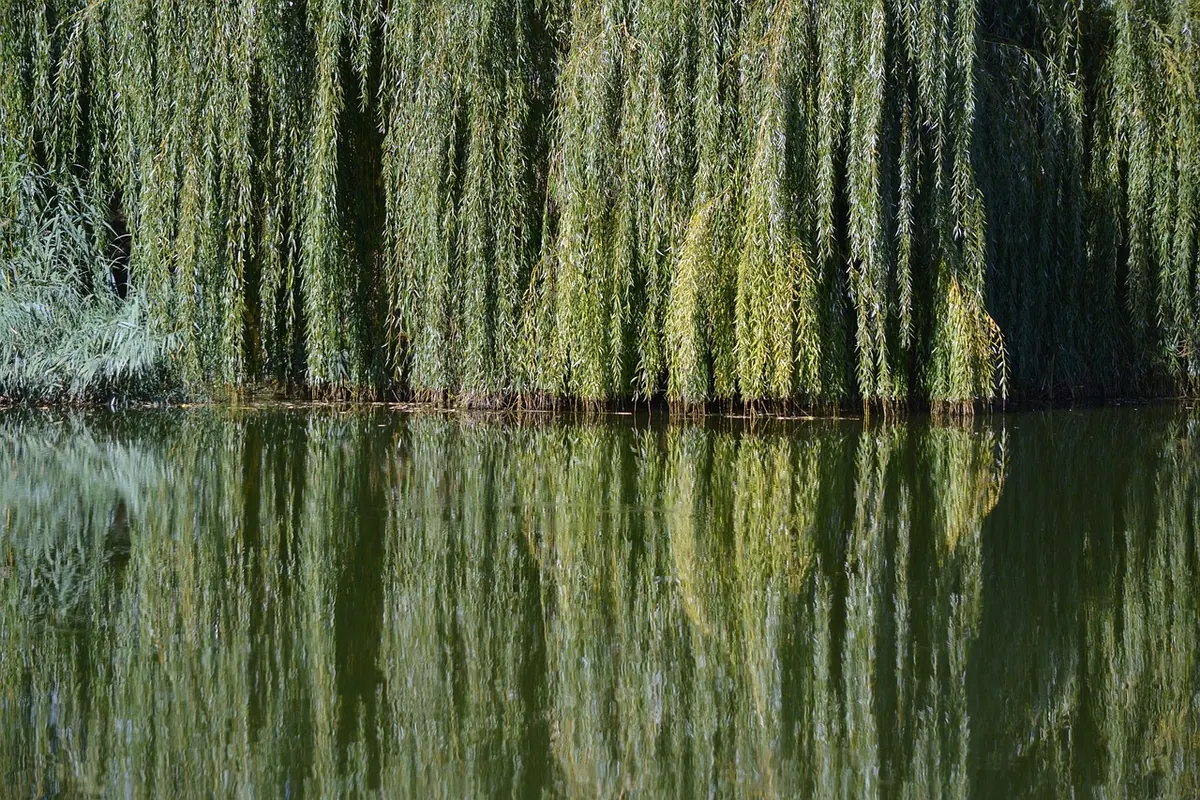
The weeping willow is a landscape tree. Left alone in damp soil, it can reach fifteen to twenty metres and spread almost as wide, with branches sweeping down to touch the grass. Young trees can put on a metre or more of growth in a good year, which is thrilling for the first three summers and slightly alarming by the fifth. Its habit is broad and cascading, and it casts a light, shifting shade that lawn grass usually tolerates better than you would expect.
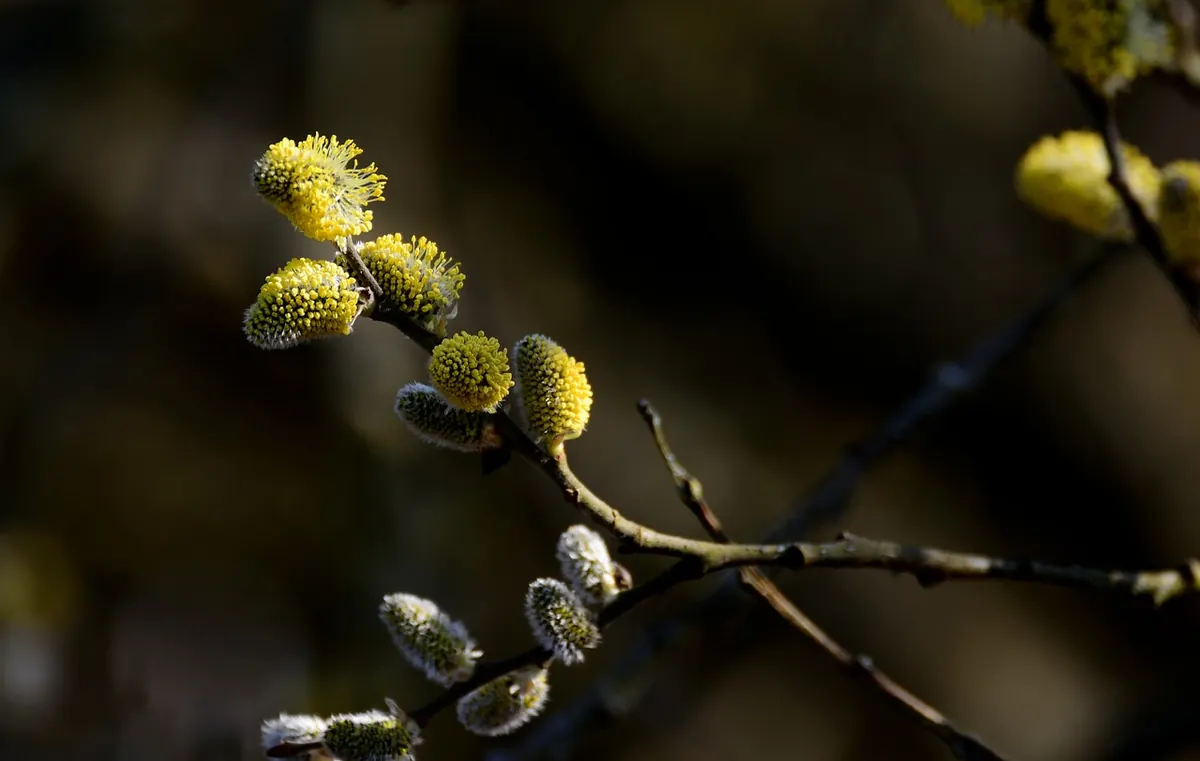
The corkscrew willow is a garden tree. Expect something in the region of six to ten metres, with a narrower, more upright crown. Everything about it twists — the twigs, the branches, even the leaves curl at the edges. In winter, when the leaves are gone, the bare stems are the main attraction: they catch low sunlight and look good against a dark hedge or a plain wall.
At a nursery, the difference is obvious within seconds. Weeping willow twigs are long, slender and yellow-green to brownish, and the leaves are narrow and grey-green underneath. Corkscrew willow twigs kink and spiral as you run a thumb along them, and the leaves are smaller and visibly wavy. If the label is missing, the twig will tell you.
Willows are water-seekers. That is the single most important fact for siting either tree. Their roots travel widely in search of moisture and are drawn to drains, pipes, soakaways and foundations where the soil stays damp.
The weeping willow is the more aggressive of the two by a wide margin. It is not a tree for a small front garden, a patio corner, or anywhere within reach of a septic system, old clay drainage or a boundary wall. A useful general guideline for any large tree is to plant it at least as far from foundations as its eventual mature height — and with a weeping willow, more distance is better, not less.
The corkscrew willow's roots are vigorous but far less expansive, and the tree's smaller eventual size makes it much easier to place. It still prefers moist soil and will sulk in a hot, dry border, but it tolerates average garden ground far better than its weeping cousin. Neither willow enjoys being planted in a spot that bakes dry in August.
Both trees want pruning in late winter, while they are still dormant. Willows bleed sap readily if cut as growth starts in spring; the flow looks alarming but is rarely harmful, and clean cuts made at the right time reduce the risk.
The weeping willow needs structural attention rather than fiddly clipping. Thin out congested branches, remove anything crossing or rubbing, and take out damaged wood after winter storms. The wood is brittle, and a mature tree will drop twigs and small branches through the year. Plan for a rake and a few minutes after windy weather.
The corkscrew willow gives you a choice. You can let it grow naturally into a small tree, or you can pollard it — cut it back each winter to a short trunk and a permanent framework of a few branches — to keep it compact and produce long, straight, twisted stems for vases and flower arranging.
Pollarded trees live much longer in a small garden than unpruned ones, and the cut material is genuinely useful. Stand the stems in a bucket of water indoors and they will often root, which is also how many people propagate the tree.
Beside a pond or a slow stream, at the far end of a long lawn as a single specimen, or in that damp corner where the grass never quite thrives. It is also a good choice for screening a view you would rather not see, provided the tree sits well away from buildings and services. Give it room and it will do the rest.
Small gardens, courtyards, a spot near a bench where you can see the winter stems, or a coppiced row along a boundary. It works well in a large container for the first few years, though it will need steady watering and eventual planting out. Cut stems are the bonus that keeps giving: a handful in a tall vase carries a room through January.
Both are prone to aphids in early summer, and willow leaves are favoured by leaf beetles and sawfly larvae. Some cosmetic rust and scab is normal and rarely serious on a healthy tree. Fast growth produces soft wood, so storm damage is a genuine risk on exposed sites, particularly with the weeping willow. Neither tree is a good candidate for a tiny plot, and neither should be planted where its roots can reach pipework.
Leaf litter is worth mentioning plainly. Willows shed a lot of small material over a long season, so keep them away from ponds you are trying to keep clear, and away from gutters you would rather not clean twice a year.
If you have a large garden, a damp patch and no drains or foundations nearby, plant the weeping willow. It will give you the most spectacular silhouette of any easy tree, and it will grow fast enough for you to enjoy it while you are still young enough to prune it.
If your garden is ordinary-sized, or you want winter interest, cut stems and a tree you can keep under control with a pair of loppers once a year, choose the corkscrew willow. It asks less of the site and gives more back in small, useful ways.
One last practical note: check your local rules before planting either. Willows are large, thirsty trees, and some areas have restrictions on planting near watercourses, boundaries or drainage. A quick question to your local council or a qualified arborist is cheaper than digging one out in ten years' time.
Photo: VeleMarinkovic / Pixabay