Weeping willows are the wrong tree for a small garden, unless you pick the right one, put it where it can be seen, and cut it back on a schedule you actually keep. The willow from the old paintings, Salix × sepulcralis 'Chrysocoma', reaches fifteen metres and more with a crown nearly as wide. Nobody should squeeze that into a courtyard. But the genus runs from riverside giants to grafted standards that stop at head height, and almost every willow answers hard pruning with fresh growth the same season. The trick is to treat the tree as the single large gesture in a tight space: one willow, one view, everything else low and patient beneath it.
"Weeping willow" covers a dozen different plants, and the small-garden ones are mostly sold as standards, grafted onto a straight stem of another willow.
With any grafted plant, watch the union. Shoots that appear on the bare stem below the graft belong to the rootstock, not to your weeping head, and they will take over if you let them. Rub them out while they are small, when you walk past in spring.
Put the tree at a corner, or at the end of a sightline from a window or a bench, where the trailing stems read against a wall, a fence or open sky. What you want is a silhouette, not a specimen in the middle of a lawn. Willows cast dense shade and their surface roots make life difficult for turf, so a lawn setting leaves you with a bald, mossy ring within a few seasons.
Leave the skirt of the tree some air. Weeping stems that brush against a hedge, a shed or a path lose the very quality you planted them for, and you will spend the summer trimming them back off the paving. A metre of clear ground beneath the lowest branches, mulched rather than planted, solves most of it. Full sun suits all of them; wet soil is a bonus rather than a requirement for the grafted standards, though the big species will drink from a pond edge without complaint.
Willows are thirsty, and their roots go looking for water. That means drains, soakaways, water pipes, septic systems and foundations are all fair game on a dry site, and on clay the same roots can cause trouble with paving and walls. Keep a full-size weeping willow well away from anything of that kind — think in terms of a distance comparable to its eventual spread — and if your plot is genuinely tight, either choose a dwarf cultivar or grow the tree in a container. A quick conversation with a local arborist before you dig costs far less than a repair.
Two other things rarely mentioned at the till. Willow wood is brittle, and a wet snow or a gust on a leaf-heavy branch will snap it; check the tree after storms. And willows host aphids in numbers, so keep a standard away from the patio table unless you enjoy wiping sticky honeydew off the chairs. Fine in a border, less fine over a car.
Beneath a willow you are gardening in dry shade with surface roots and a steady fall of twigs and leaves. Choose plants that cope with all three and are modest enough not to compete.
Plant small, in autumn, and water through the first two summers while the roots establish. Leave a mulch ring around the trunk itself and keep planting at least half a metre back from it. Skip anything greedy — big hostas, rodgersias, large shrubs — because the willow will win, and you will have wasted both money and a season.
Willows are among the most forgiving trees for hard cutting. They shoot from old wood, which gives you three options. Coppicing, cutting the whole plant back to a stump of 30 to 60 centimetres every one to three years in late winter, turns it into a shrub and gives you the brilliantly coloured young stems of Salix alba 'Vitellina' or Salix daphnoides — a fine small-garden plant in its own right. Pollarding, cutting at 2 to 3 metres on a permanent trunk, keeps a lollipop shape and, over time, a more manageable root system. The third option is the annual tidy on a grafted standard: snip last year's shoots back to two or three buds from the graft in late winter, before growth starts.
Do this before the buds break, not in autumn, and do not be timid. One caution: willow prunings root for a pastime, even from a stick left on damp ground. Shred or burn them, or keep them well away from drains and streams. Better still, save a few straight lengths as plant supports.
Keep the surrounding planting to three or four species so the willow stays the subject. Silver-grey foliage — stachys, lavender, santolina — flatters willow green and picks up the light. Dark leaves, such as Physocarpus 'Diabolo', give the pale stems something to sit against. A soft grass like molinia echoes the arching line without copying it. In a courtyard of six by four metres, a single grafted standard in the far corner, a gravel mulch beneath, bulbs and ferns at its feet, and one bench is a complete design. If you have no soil at all, a 'Hakuro-nishiki' standard in a pot of 45 to 50 centimetres, planted in John Innes No. 3, will thrive for years provided you water properly and root-prune every third or fourth winter.
Get those five right and a weeping willow stops being a liability in a small garden. It becomes the thing people notice from the kitchen window in February, when the bare stems are still moving and nothing else has started.
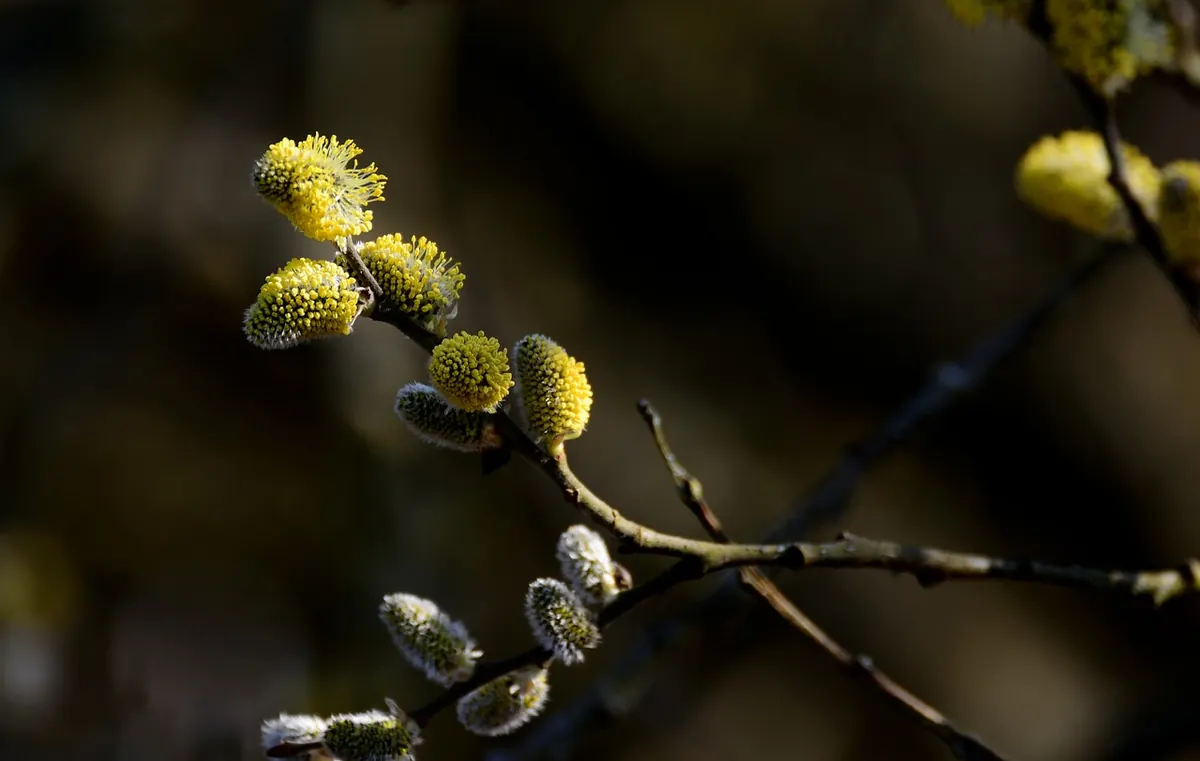
Photo: Peggychoucair / Pixabay