A bare-root willow arrives looking like something you might use to stake a border: a bundle of leafless stems, a fan of roots, and not a spoonful of soil. It is easy to assume it is dead on arrival. It is not. Planted while it is still dormant, a bare-root willow settles in faster than a potted one, costs a fraction of the price, and often puts on a metre or more of growth in its first summer.
Willows help you here. Most species root so readily that a cut stem pushed into damp ground will often take. That is why the details below matter less than you might fear, and also why they still matter: the tree will forgive a clumsy hole, but it will not forgive the wrong site, or being left alone through its first dry spell.
Willows want light. Give them at least half a day of direct sun. In deep shade they grow lank and pale, and they mildew — the one problem willows attract reliably.
Moisture is more flexible than the reputation suggests. Willows tolerate wet ground better than almost any other tree, and white willow and crack willow are happy at the edge of a pond or a ditch. Many garden willows, including goat willow and the smaller weeping and variegated forms sold for borders, grow perfectly well in ordinary soil. What none of them enjoy is a planting hole that fills with water in November and stays full until March. If your chosen spot puddles for days after rain, plant on a slight mound and let the water drain away from the roots.
Then there is the question of space, which is where most willow plantings go wrong. The roots travel a long way in search of water, and they are persistent. Keep the tree well clear of drains, septic systems, water pipes, foundations, paving and boundary walls. As a rule of thumb, allow a distance roughly equal to the tree's eventual height from anything you cannot afford to have cracked. Check for overhead cables, too, and picture the canopy in ten years rather than two.
Bare-root stock is lifted from the nursery field in dormancy and sold without soil around the roots, so the planting window runs from late autumn to early spring. In a mild climate, November through March is ideal. The one rule worth following without argument: get the tree in the ground before the buds begin to swell. Roots keep growing whenever the soil is above about four degrees, so an autumn planting buys weeks of root growth before the cold sets in, and you see the benefit the following summer.
Never plant into frozen ground or a waterlogged hole. If the weather turns, keep the willow cold but frost-free, roots wrapped in damp newspaper, and wait. If the delay stretches past a few days, heel it in: lay the roots in a shallow trench in a spare patch of ground, cover them, and water.
Good bare-root stock looks like this:
Walk away from a bundle that has spent an afternoon in a warm car or a sunny shop doorway. Willow is forgiving, but dead roots do not come back.
Unwrap the tree as soon as you can and stand the bundle in a bucket of water, roots only, for two to four hours. A soak rehydrates the tissue and makes the roots pliable enough to spread without snapping. Overnight is fine. Several days is not, since roots sitting in stagnant water begin to rot.
Then trim. With clean, sharp secateurs, cut out any roots that are broken, blackened or mushy, back to firm white or cream tissue. Shorten the ones that are absurdly long — anything that would have to be folded or coiled to fit the hole — so they can lie out straight. Leave the fine roots alone if you can; those are the ones that will do the drinking this spring.
Keep the roots damp from the moment they leave the bucket until the soil goes back over them. Ten minutes of sun and wind on bare roots does more harm than a badly dug hole ever will.
Plant it shallow, water it deep, and the willow will do the rest.
A newly planted willow has a small root system and large
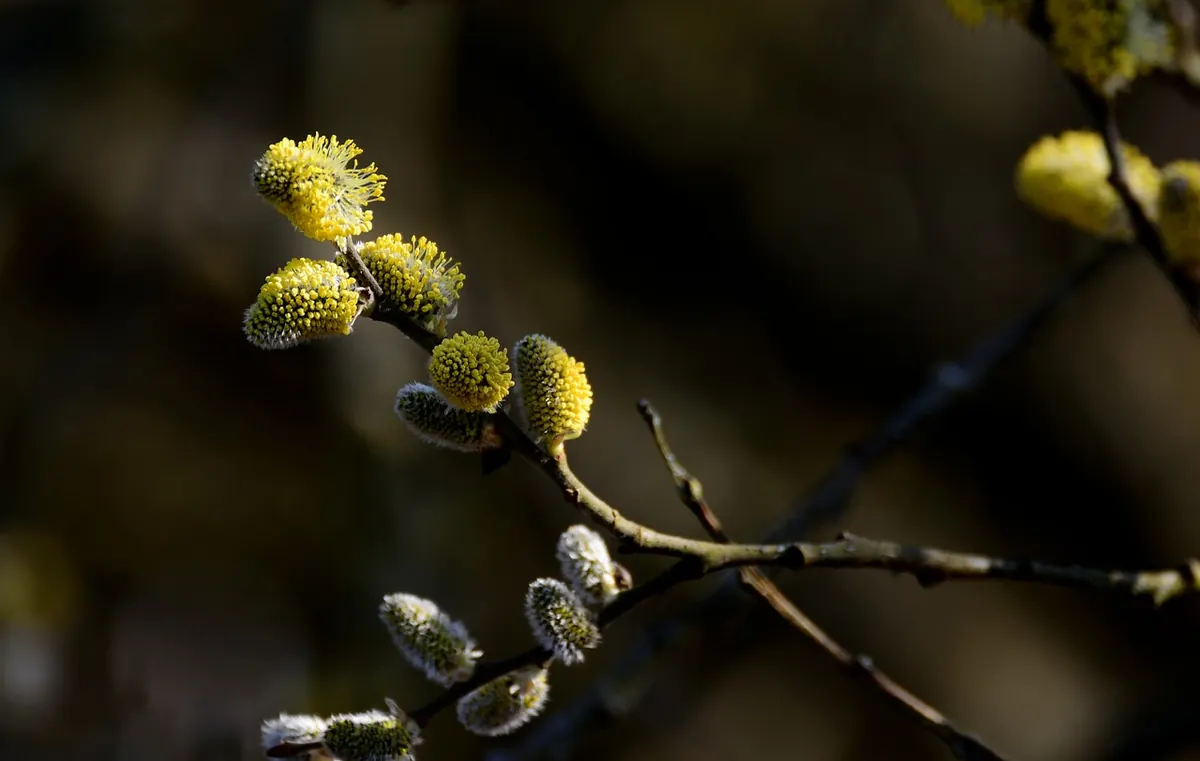
Photo: liggraphy / Pixabay